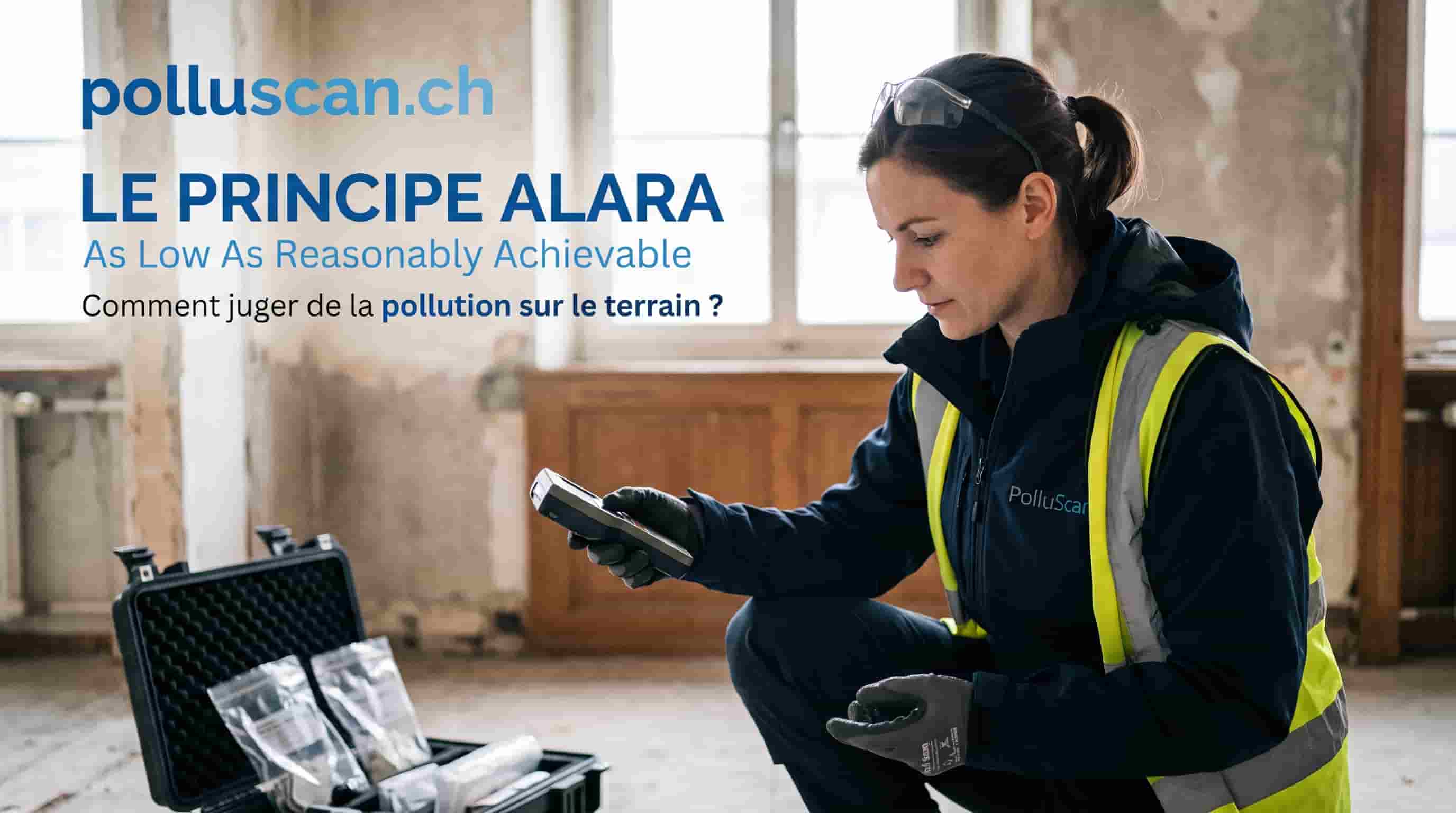
You will hear this word all day at PolluConf on 1 October. The organisers made it the theme of the 2026 edition, under the banner “Aloha ALARA”. ALARA stands for “as low as reasonably achievable”. Behind those four letters sits a question every surveyor settles several times per job, often without putting it into words. How far should you go to protect the occupants, and when does it become too much?
Where the principle comes from
The principle was born in radiation protection. In Switzerland, the Radiological Protection Ordinance calls it “optimisation”. Its Article 4 requires the likelihood of exposure, the number of people exposed and the dose each one receives to be kept as low as reasonably possible. Put simply, meeting the dose limit is not enough. You also have to show that you tried to go below it, as long as the effort stayed reasonable.
For building pollutants, the word ALARA does not appear in the Environmental Protection Act. The Act carries the same idea all the same. Its Article 11 requires emissions to be limited as a precaution, as far as technology and operating conditions allow and as long as the cost remains economically acceptable. In other words, the law expects exposure to be reduced before any harm is proven. It sets two guardrails, what technology can do and what can reasonably be paid.
A limit value is a ceiling, not a target
Take asbestos. Suva sets the occupational exposure limit, the MAK value, at 10,000 respirable fibres per cubic metre of air, or 0.01 fibres per millilitre. This value applies to workplaces where asbestos materials are handled. Wherever that work is not needed, in an office for example, the concentration not to exceed drops to 1,000 fibres per cubic metre.
These values are obligations. Nobody may exceed them. But they do not tell you what to aim for. That is where ALARA comes in. Between zero and the limit lies a whole range of situations, and the principle asks you to choose, among the reasonable measures, the one that cuts exposure the most. Staying just below the MAK value is therefore not a success. It is the legal minimum.
Both halves of the principle carry equal weight. “As low” forbids stopping at the limit when you can do better at little cost. “Reasonably” forbids demanding full removal when it exposes more people than it protects. Forget the second half, and the precautionary principle becomes a demolition principle. Forget the first, and the limit value becomes a target that everyone settles into.
An example from a survey
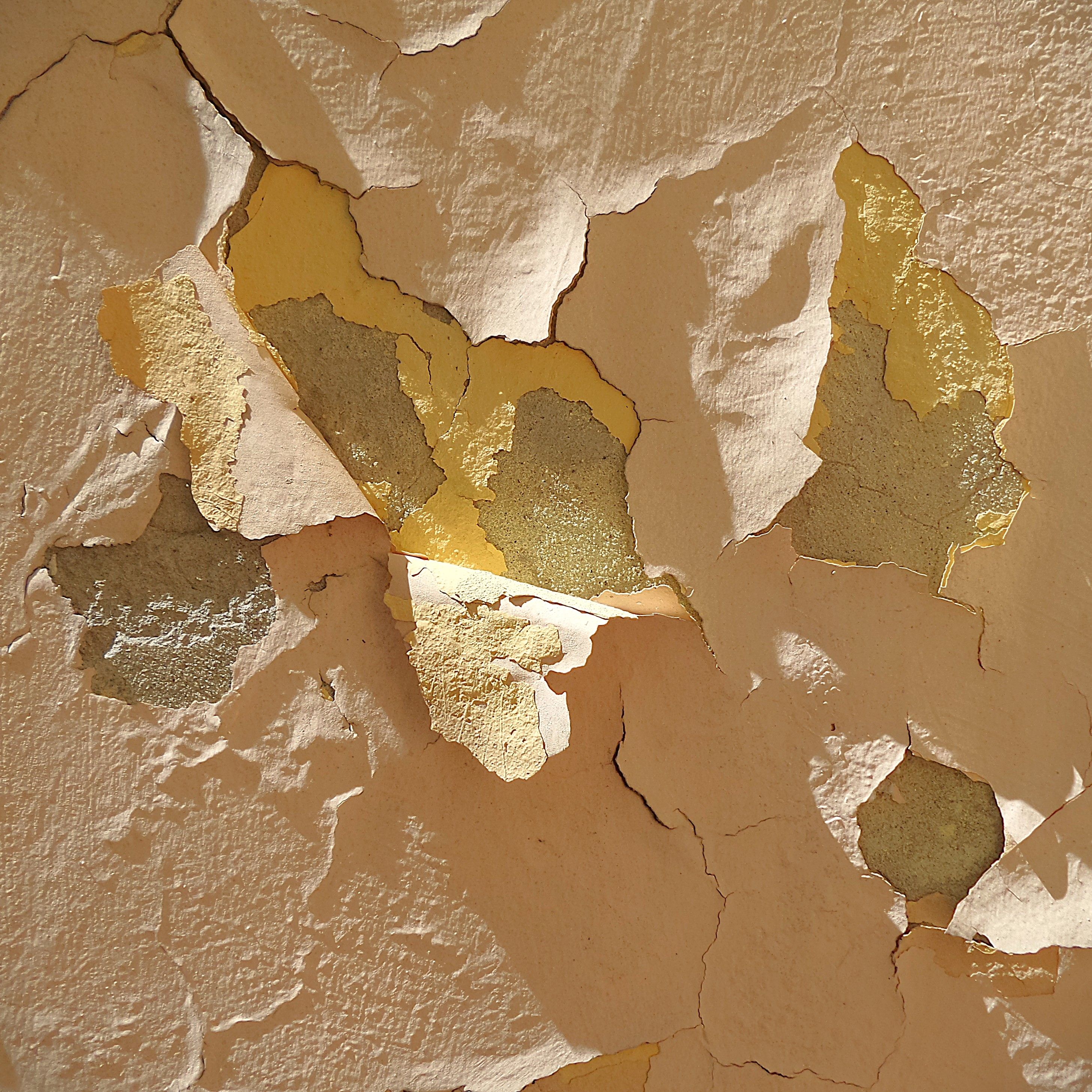
Picture a school built in the 1960s. The municipality plans to renovate the toilets and hires you for the pre-works survey. In the ground-floor corridor, under linoleum laid about ten years ago, you find vinyl-asbestos floor tiles. The lab confirms chrysotile, white asbestos. The tiles are firmly bound, intact and fully covered. The planned works do not touch this corridor.
You have two options. The first is to recommend immediate removal. It would release fibres during the works, close the corridor for the duration and cost a full asbestos removal, all for a current exposure close to zero. The second is to leave the tiles in place. You record the zone in the pollutant register, you ban drilling and sanding the floor, and you require a check before any future work in this corridor. That is the ALARA answer. Exposure stays minimal and the resources committed stay proportionate.
Now change a single detail. The same tiles sit at the foot of the main staircase, the linoleum is worn and several tiles are cracked. Pupils walk over them all day. The exposure is no longer theoretical. Removal becomes the reasonable measure, and the report must recommend it plainly.
Three facts tipped the decision: the condition of the material, the use of the room and the planned works. Those are what you must record on site, for every suspect material, before you decide.
What the report must say
The report must carry the reasoning, not just the conclusion. A report that says “vinyl-asbestos tiles, leave in place” protects nobody. A report that says why, with the observed condition, the use of the room and the conditions set, gives the client a decision they can stand behind. It gives the authority a decision it can check.
This requirement protects the surveyor too. Recommending the removal of everything that contains asbestos looks cautious. In reality, it exposes workers to fibres that would have stayed put, it wrecks the client's budget, and it rests on no legal basis. ALARA is precisely what lets you write “leave in place” with a signed justification, instead of hiding behind the heaviest measure.
In PolluScan, the condition of the material and the building element are recorded on each sample, at the time of sampling. A zone can be marked polluted or remediated directly on the plan, without a new sample. The ALARA reasoning then shows in the register, and it follows the building to the next works.
Sources
Radiological Protection Ordinance (RPO, SR 814.501), Art. 4. Federal Act on the Protection of the Environment (EPA, SR 814.01), Art. 11 para. 2. Suva, “Asbestos: legal basis and worker protection”, and FCOS directive no. 6503 “Asbestos”. Swiss Asbestos Forum, “Protection requirements”. PolluConf 2026 programme, polluconf.ch.