
Neither sheet sets a new threshold for the paint itself. Both tighten everything around people’s exposure. The FOPH information sheet, published in May 2026 with the FOEN and the FSVO, recalls that lead has been banned in paints since 2005 and recommends leaving any work on an old coating to professionals. Suva, for its part, has announced that it will adopt the new European limit values: the air limit value (MAK) will drop from 100 to 30 µg/m³ on 1 January 2027, and a biological limit value (BAT) of 150 µg of lead per litre of blood will apply by 1 January 2029 at the latest. For the surveyor, the consequence is direct: before choosing its method, the contractor will need a report that locates every lead paint, its substrate and its condition.
What the FOPH sheet says
The “Faktenblatt Blei” published in May 2026 is a public-health sheet, not a survey method. It sets no limit content for a paint. It does recall the ban dates, which help date a coating:
- White lead (lead carbonate): banned in water-based and glue paints from 1926, fully banned in 2005.
- Lead chromate used as a pigment: banned in paints since 2005 and in plastics since 2015.
- Red lead (lead oxide) used as an anti-rust primer: banned since 2005.
In other words, any paint applied before 2006 is suspect, and an orange anti-rust coating on metal almost always is.
The recommendations that concern the site come down to three points: old coatings can contain a lot of lead, renovation work on them must be left to professionals to avoid spreading dust, and work clothes stay on site. For the rest, the sheet refers to Suva’s “bauschadstoffe” page and to the MAK and BAT values in chapter 1.8.7 of the publication “Occupational exposure limits”.
One figure shows what is at stake: the median blood lead level measured in adults in Switzerland fell from 20 µg/l in 2009-2010 to 13 µg/l in 2020-2021, a 35 % drop in ten years. The renovation site remains one of the few places where that curve can turn back up.
What Suva has already announced
Suva’s technical sheet on lead will be presented at PolluConf on 1 October by Philippe Schneuwly, right after the FOPH sheet presented by Roger Waeber. Its content is not yet public at the time of writing. The values it will apply are already known, though: the FCOS published them in issue 101 of its bulletin in November 2025, in an article by Michael Koller and Anja Zyska, occupational physicians at Suva.
- Air limit value (MAK): from 100 µg/m³ today to 30 µg/m³, planned for 1 January 2027.
- Biological limit value (BAT): from 400 µg/l of blood for men and women over 45 to 150 µg/l for everyone, by 1 January 2029 at the latest.
- Women of childbearing age: the 100 µg/l value disappears and gives way to a recommendation not to exceed 45 µg/l.
The European Union has applied the same values in stages since 9 April 2026 (Directive 2024/869). Suva chose to adopt them rather than wait.
What changes on site
An air limit value divided by more than three cannot be made up with a higher-class mask. It is handled upstream, through the choice of working method, and that choice depends on the survey. Sanding, blasting, scraping and heat stripping generate dust; chemical stripping, encapsulation and removing the whole element generate far less. The contractor can only choose if the report states precisely which paints will be disturbed, on which substrate and in what condition.
The threshold that triggers these measures is still set by the cantons, not by the Confederation. The most explicit reference in French-speaking Switzerland is the Geneva SABRA directive “Diagnostic plomb avant travaux” (version 2.2, April 2024):
- In a building built before 2006, an investigation is mandatory before any sanding, blasting, scraping or heat stripping of paint.
- The decision criterion is 500 µg/cm² of total lead, as a surface concentration.
- Measurement is by X-ray fluorescence (XRF) with a radioactive-source instrument reading at least the lead K line; instruments limited to the L lines are considered unsuitable.
- A quality check is required before and after each series of measurements: a blank at 0 mg/cm² and a positive standard at 0.7 or 1 mg/cm².
- Above the threshold, only a trained company recognised by SABRA may intervene, and it must notify its work at least 24 hours before starting.
Where to look, still according to the directive: white lead in washable wall paints in wet rooms (bathrooms, kitchens), lead paints on joinery (window frames, doors, skirting boards, cupboards, exterior shutters) and red lead on all ferrous metal elements (structures, fences, radiators, pipes).
On mineral substrates, the OLED implementation guide on construction waste does not require heavy-metal analysis in the standard case, unless there are signs of a very high content. The survey still has to classify the waste: chemical stripping or milling residues fall under OMoD code 17 04 09 ds, blasting sand under code 12 01 16 ds.
What the report must contain
The Geneva directive sets a minimum content that serves as a reference in every canton:
- Each surveyed element, located without ambiguity: floor, room, wall, ceiling, façade, fixed installation.
- The measured surface concentration, its uncertainty and the nature of the substrate (wood, metal, concrete).
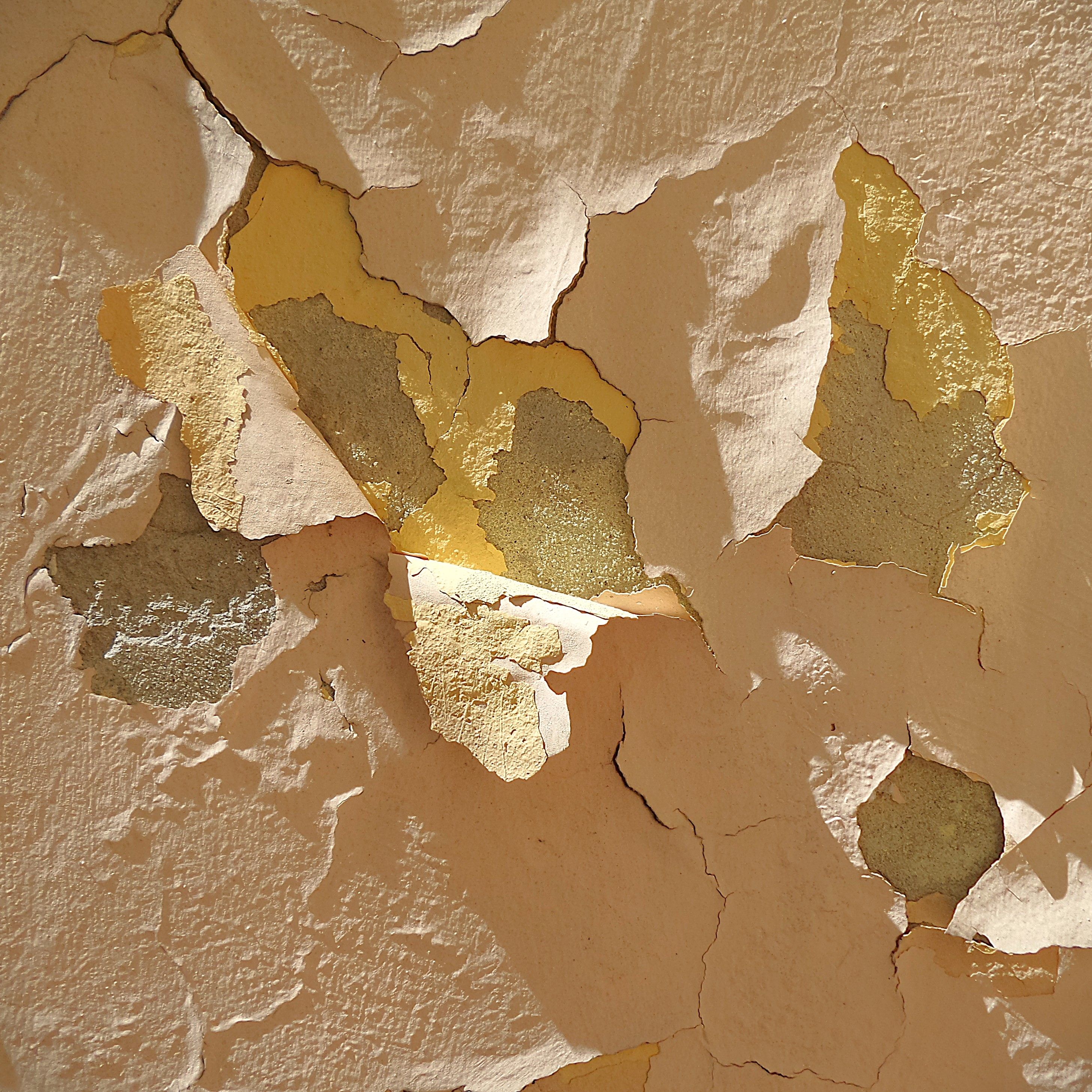
- The condition: intact, normal wear or degraded, with the type of degradation (cracked, flaking, blistered, split, powdery).
- A plan showing every paint above 500 µg/cm² as well as the rooms that were not surveyed.
- As an annex, the raw table from the XRF instrument, one line per measurement, with the duration and uncertainty of each.
In PolluScan, an XRF measurement point is placed on the plan like any other sample, with its building element, its substrate and its photo. The lead paint plan and the measurement table are generated from the same file. That is the part we are building, so that the report keeps up with the falling limit values without lengthening the surveyor’s day.
Sources
FOPH, FOEN and FSVO, “Faktenblatt Blei”, May 2026. FCOS, bulletin no. 101, November 2025, pages 20 to 22, “Neue Grenzwerte am Arbeitsplatz für Blei und seine anorganischen Verbindungen”. Canton of Geneva, OCEV, SABRA directive “Diagnostic plomb avant travaux”, version 2.2, April 2024. PolluDoc, “Métaux lourds dans les peintures”. PolluConf 2026 programme, polluconf.ch.